+8613412180050
carbonfiber@loongcarbonfiber.com
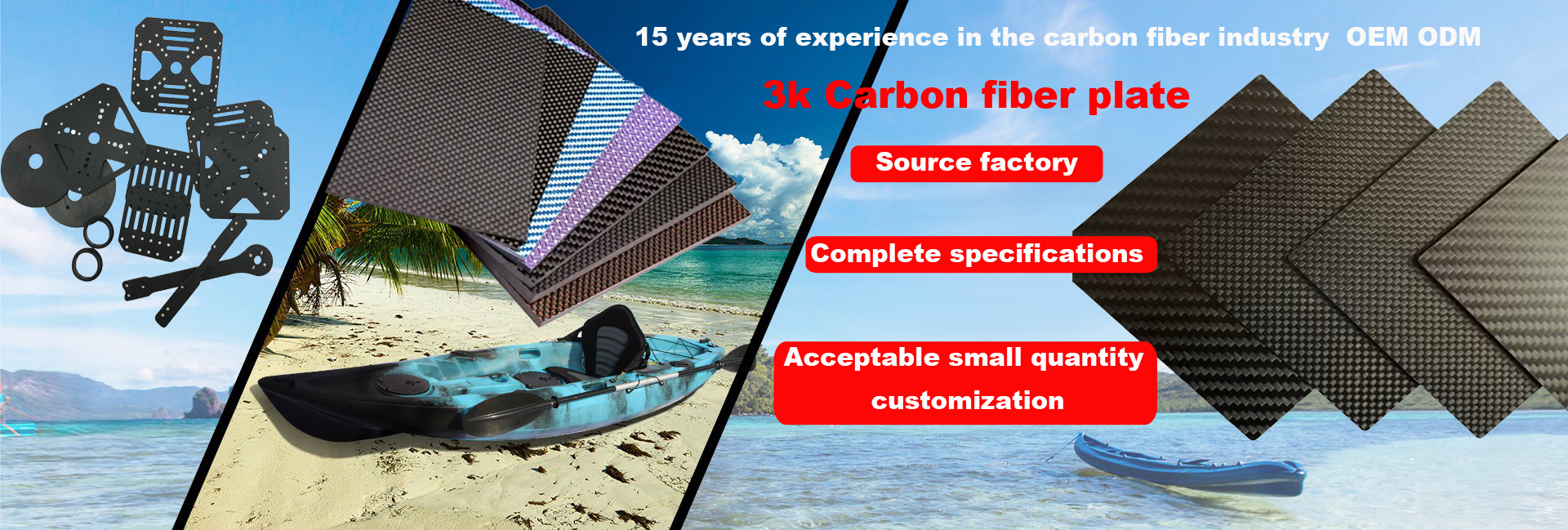
Selecting the right carbon fiber sheet begins not with aesthetics, but with an understanding of fiber architecture—because performance is woven into every thread. The three primary configurations—unidirectional (UD), bidirectional (2D), and woven patterns—each offer distinct mechanical behaviors suited to specific engineering demands.
Unidirectional sheets, where all fibers run parallel in a single direction, deliver maximum tensile strength and stiffness along that axis—ideal for beams, spars, or drone arms subjected to predictable, linear loads. However, they exhibit reduced off-axis strength and require careful layup design.
Bidirectional (typically 0°/90°) laminates provide balanced reinforcement in two orthogonal directions, making them excellent for flat panels, enclosures, or structural plates experiencing multi-axial stress. Their predictability simplifies finite element analysis and manufacturing.
Woven carbon fiber sheets—most commonly in twill or plain weaves—offer superior drapeability over complex contours and enhanced impact resistance due to interlaced fiber crimps. While slightly less stiff than UD equivalents, their visual appeal and isotropic-like behavior make them favored in automotive trim, consumer electronics, and architectural applications.
Choosing wisely isn’t about preference—it’s about aligning material microstructure with functional requirements. Misalignment leads to over-engineering, cost inflation, or premature failure. Understand your load paths, and let the fibers follow.

Name: Hellen Li
WeChat:Loongcarboncomposite
Tel:+8613412180050
Whatsapp:8613412180050
Email:carbonfiber@loongcarbonfiber.com
Add:NO.10, Junma Road, Dalang Town, Dongguan City, Guangdong Province, China
 CHINESE
 ENGLISH