+8613412180050
carbonfiber@loongcarbonfiber.com
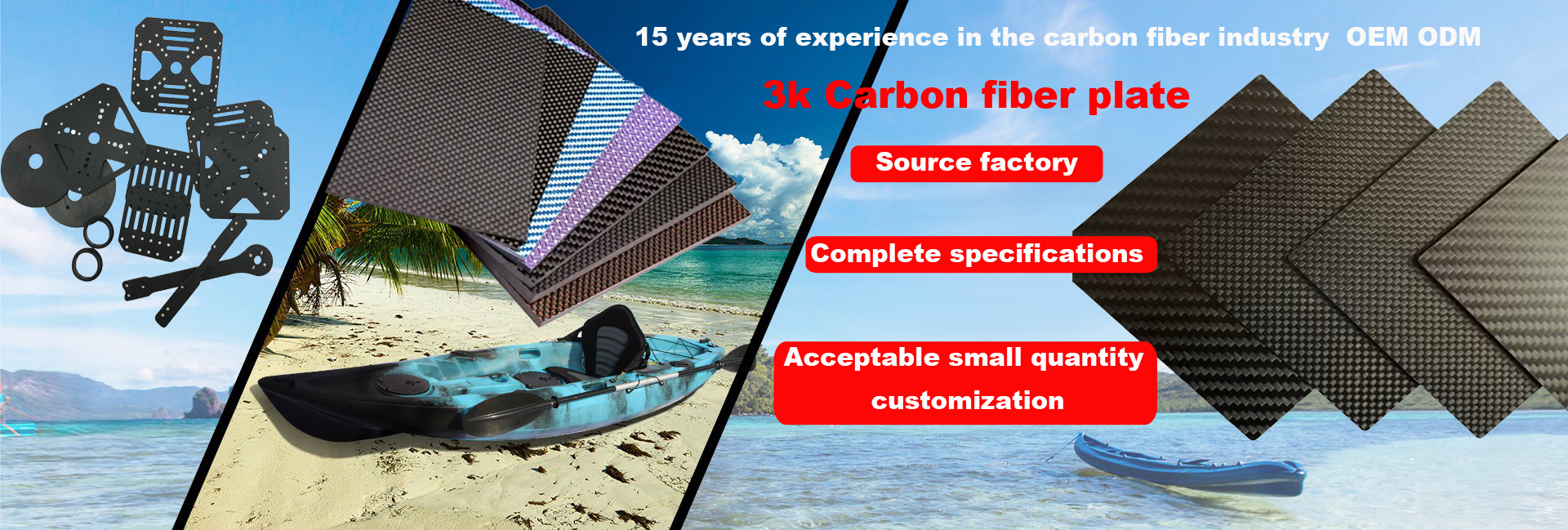
Aluminum alloys have long dominated lightweight structural applications—thanks to their favorable strength-to-weight ratio, machinability, and conductivity. Yet in harsh or corrosive environments, their Achilles’ heel becomes apparent: susceptibility to oxidation, galvanic corrosion, and pitting—especially when coupled with dissimilar metals or exposed to salt spray.
Carbon fiber sheets, by contrast, are chemically inert. Their polymer matrix and carbon filaments do not oxidize, rust, or degrade in marine, chemical, or high-humidity settings. Accelerated aging tests show CFRP retaining >90% of mechanical properties after 2,000+ hours of salt fog exposure—while aluminum alloys often exhibit visible corrosion within weeks.
Furthermore, carbon fiber’s fatigue resistance far exceeds that of aluminum. Under cyclic loading (e.g., in drone propeller mounts or robotic joints), aluminum develops microcracks that propagate over time; CFRP, with its layered architecture, distributes stress more evenly and resists crack initiation.
True, aluminum offers better impact toughness and electrical grounding—but for applications prioritizing longevity in aggressive environments, carbon fiber delivers a compelling case for extended service life with zero maintenance.

Name: Hellen Li
WeChat:Loongcarboncomposite
Tel:+8613412180050
Whatsapp:8613412180050
Email:carbonfiber@loongcarbonfiber.com
Add:NO.10, Junma Road, Dalang Town, Dongguan City, Guangdong Province, China
 CHINESE
 ENGLISH