+8613412180050
carbonfiber@loongcarbonfiber.com
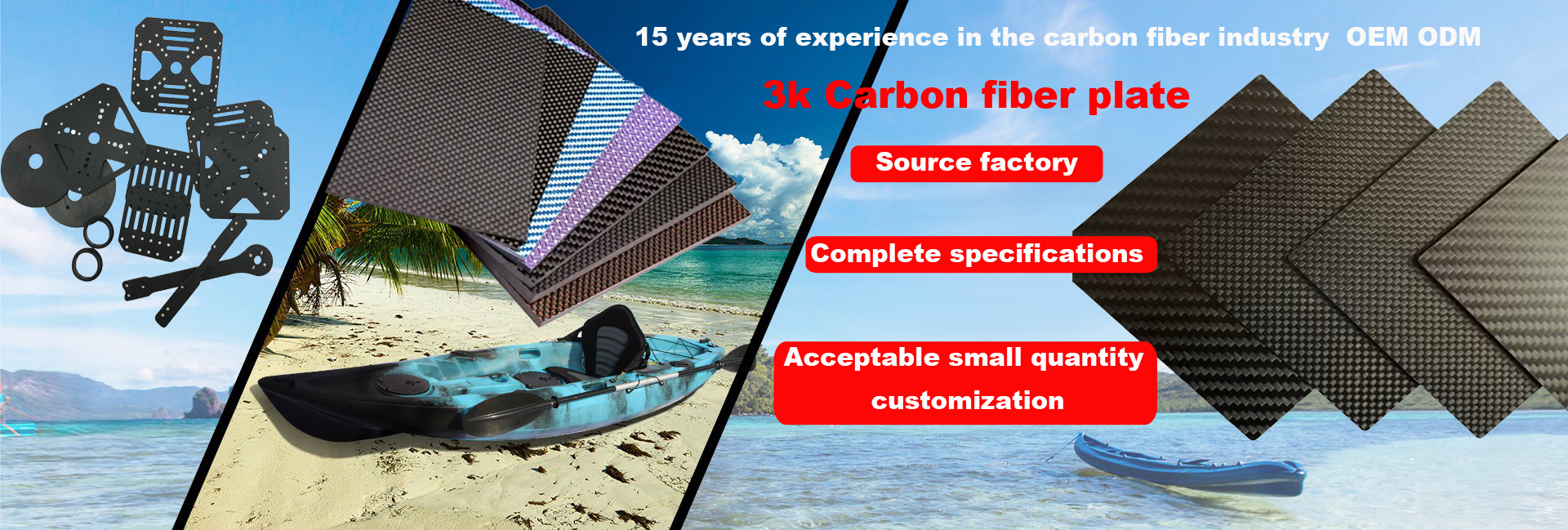
In industries like aerospace, semiconductor manufacturing, or precision robotics, a deviation of even 0.1 mm can render a component unusable. Achieving such fidelity with carbon fiber sheets demands mastery over every phase of production—from layup and curing to CNC machining.
Challenges include:
· Resin shrinkage during cure, which can warp flatness.
· Fiber spring-back after cutting, especially in thick laminates.
· Thermal expansion mismatch between tooling and composite during machining.
Top-tier manufacturers combat these through:
· Autoclave curing under controlled pressure and temperature ramps.
· Post-cure stress-relief cycles to stabilize dimensions.
· Diamond-coated CNC tools with optimized feed rates to prevent fraying.
· Coordinate Measuring Machine (CMM) validation for critical parts.
When ordering precision-machined carbon fiber components, specify tolerance classes (e.g., ±0.05 mm for critical features) and request inspection reports. Remember: the raw sheet may be flat, but the final machined part must meet functional geometry.
In the world of high-precision engineering, tolerance isn’t optional—it’s existential.

Name: Hellen Li
WeChat:Loongcarboncomposite
Tel:+8613412180050
Whatsapp:8613412180050
Email:carbonfiber@loongcarbonfiber.com
Add:NO.10, Junma Road, Dalang Town, Dongguan City, Guangdong Province, China
 CHINESE
 ENGLISH