+8613412180050
carbonfiber@loongcarbonfiber.com
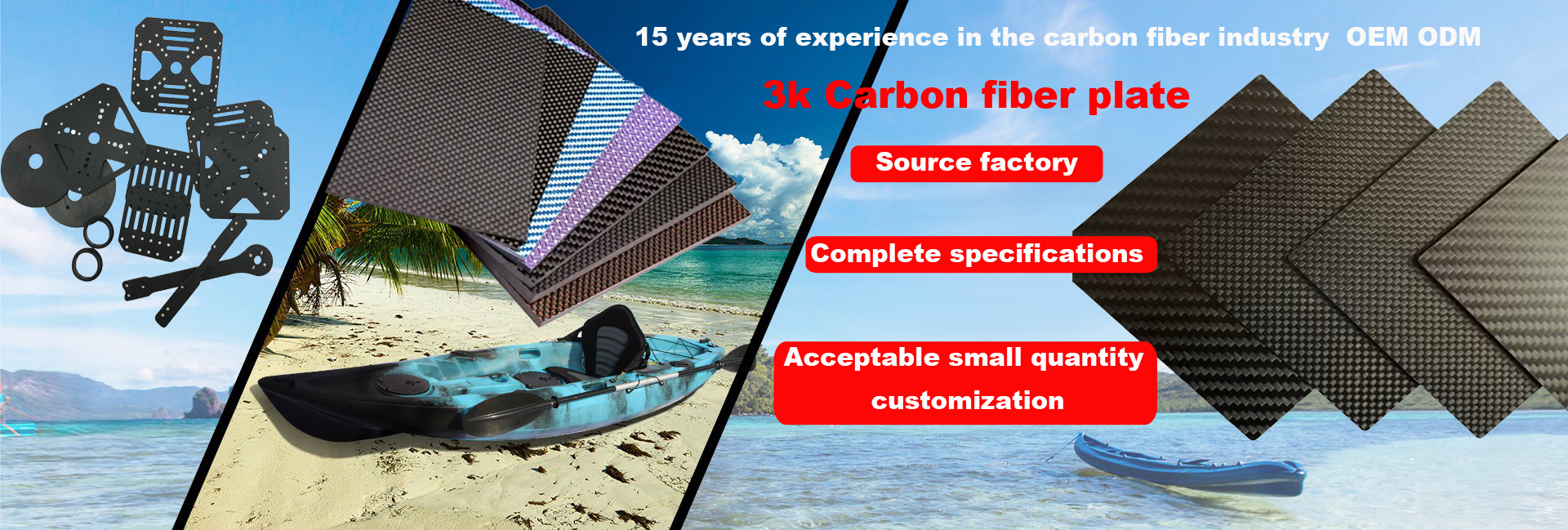
Wood-plastic composites (WPCs)—blends of wood flour and thermoplastics—have gained traction in outdoor decking and low-cost furniture due to their eco-friendly branding and ease of processing. But when benchmarked against carbon fiber sheets in terms of durability, dimensional stability, and functional versatility, the gap widens significantly.
WPCs absorb moisture, swell, warp, and degrade under UV exposure unless heavily treated. Their mechanical properties are modest (tensile strength ~20–40 MPa), limiting use to static, non-structural roles. Carbon fiber sheets, meanwhile, are hydrophobic, dimensionally stable, and mechanically robust—ideal for precision fixtures, transport racks, or architectural cladding in demanding climates.
On sustainability: while WPCs utilize recycled content, they are rarely recyclable themselves and often end up in landfills. Carbon fiber, though energy-intensive to produce, enables massive energy savings in use-phase (e.g., lighter EVs = lower emissions). Emerging recycling technologies for CFRP further close the loop.
For decorative, low-load applications, WPC suffices. For performance-driven, long-life solutions—carbon fiber leads decisively.

Name: Hellen Li
WeChat:Loongcarboncomposite
Tel:+8613412180050
Whatsapp:8613412180050
Email:carbonfiber@loongcarbonfiber.com
Add:NO.10, Junma Road, Dalang Town, Dongguan City, Guangdong Province, China
 CHINESE
 ENGLISH